

How To Turn Drawing Into Hatched Style
Hatching and cross hatching are linear drawing techniques that tin be used to create texture, value, and the illusion of form and light. Typically used as an application technique when the medium is linear in nature, hatching and cross hatching are ofttimes used together.
Both techniques work well with a variety of different cartoon mediums including pen and ink, graphite, colored pencils, and pastels. Hatching and cantankerous hatching tin likewise be constitute in traditional printmaking techniques such as carving and engraving.
Some artists adopt to use either hatching or cross hatching in a specific cartoon in gild to create harmony. Most often however, the two techniques are used together in the same drawing or painting.
While using hatching or crosshatching in a drawing tin can create a variety of textures, the technique is mostly used to create a full range of value. The placement of values within the work leads to the illusion of the form of the subject as well equally the illusion of a defined light source.
Hatching
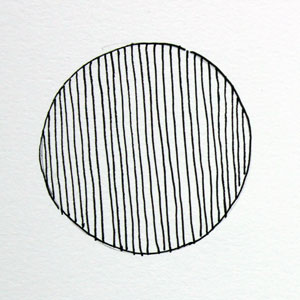 Hatching is created when non-crossing lines are used to indicate the value on or around an object. The value added to the object is dependent on the location of a low-cal source. More than marks are added in the areas of core shadow and cast shadow, while less marks should exist in lighter areas.
When hatching is used, the lines drawn generally go in the same direction and are more often than not parallel with each other. Sometimes, the lines may curve slightly or even a great bit depending on the contours of the object. Lines of this nature are referred to equally cantankerous contour lines.
When used correctly, cantankerous profile lines can further the illusion of form by giving the viewer information well-nigh the bodily 3-dimensional qualities of the object.
Past changing the frequency of the utilize of line, and the amount of space between the lines, the artist can create a full range of value in the drawing. Bold that an artist is working on white paper, more space between the lines (more paper showing) will pb to lighter values in the drawing. Less space between lines will naturally pb to darker values in the cartoon.
Cantankerous Hatching
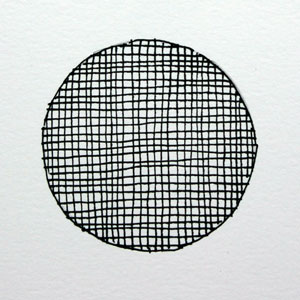 When cross hatching is used, the artist may begin adding value equally hatching, but so let the lines to cross over each other. The more that the lines cross over each other, the darker the value becomes.
Many artists arroyo the add-on of crossing lines as a science, following a specific order of vertical lines, followed by horizontal lines, followed by diagonal lines, and then on.
This method produces very deliberate and controlled marks that are very exact and precise. Others simply cross the lines at random leading to "looser" drawings. Neither way is improve, per se. Some looser approaches work meliorate for some subjects, while more than rigid approaches are suitable for other subjects.
Variation in Marks
How hatching and cross hatching is used in a drawing is limitless. The artist tin can choose to make marks in whatsoever style that they choose.
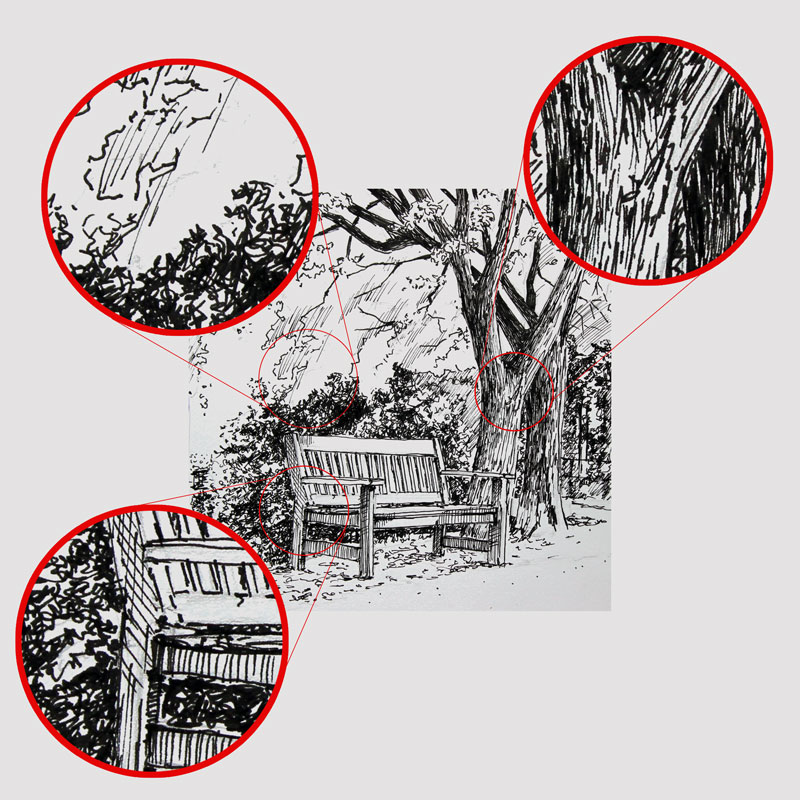
They may besides combine linear techniques to create a variety of textures or patterns. The organization of patterns tin add interest to a cartoon likewise as push the tonal qualities.

Hatching and Cross Hatching with Pencil
Every bit mentioned earlier, hatching and cross hatching tin can be used for applying a multifariousness of media. It is not just limited to pen and ink drawing.
When the technique is used with a graphite pencil, the pressure becomes a cistron in the evolution of values. The width and texture of the line can easily exist manipulated.
As with any drawing or painting, the cross contour lines of the subject must be considered. The marks that are applied must imply the form of the discipline, which means that they should indicate or suggest the cantankerous contours of the form.
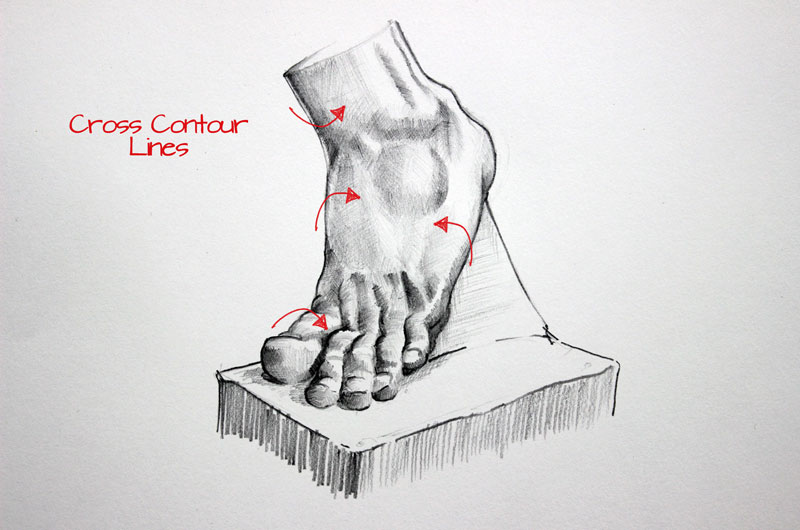
In order to suggest the invisible cantankerous contours, we'll need to apply the hatching and cross hatching in a manner that follows the course. This will be a series of marks that "flow" effectually the form.
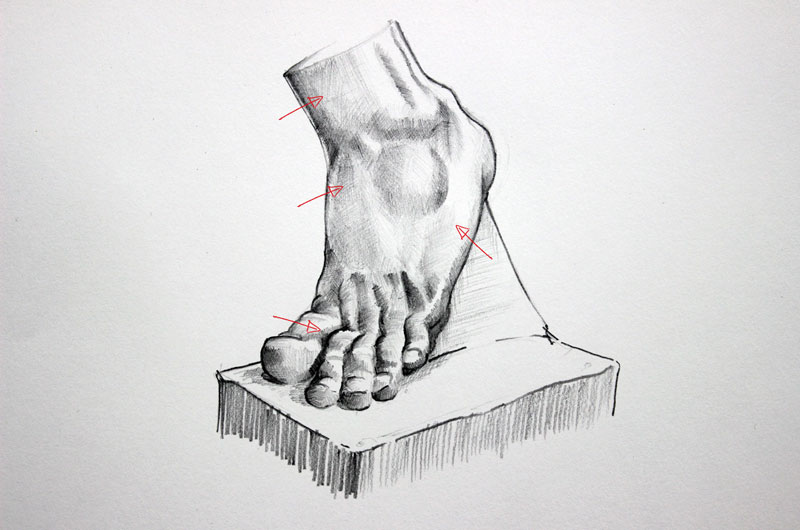
The next set of lines should continue the development of the cross contours.
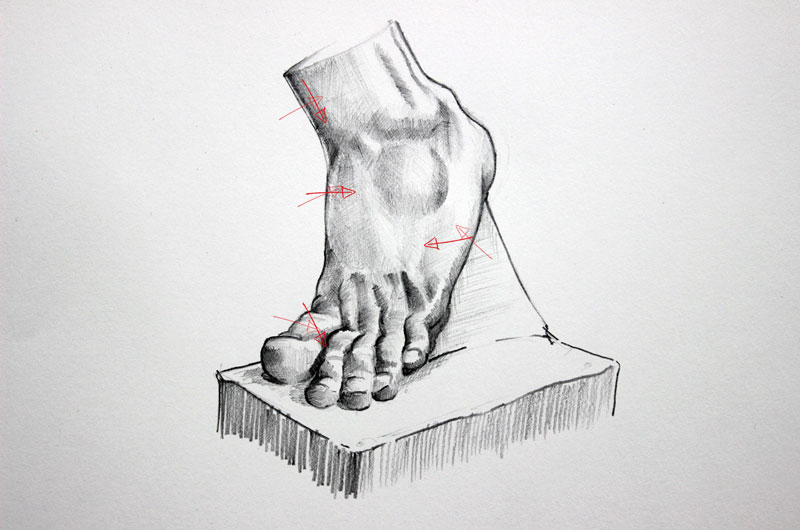
This evolution continues with each ready of subsequent lines that are added.
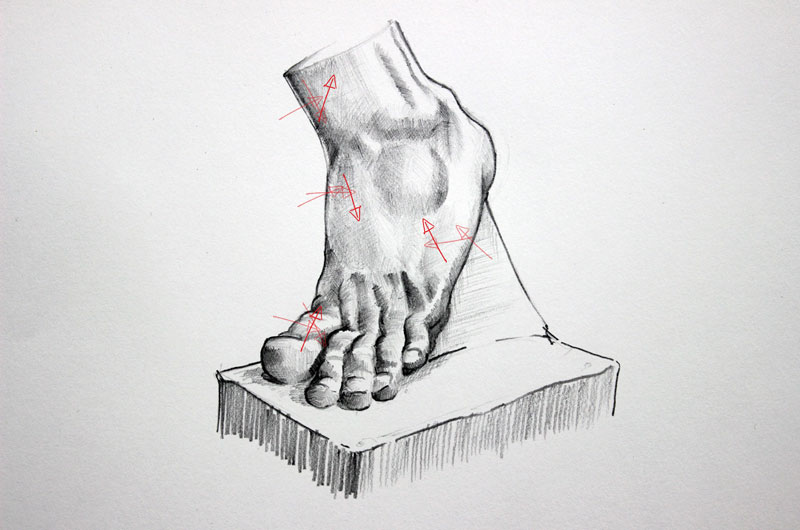
The direction, frequency, and width of the lines are at the descretion of the creative person. Ultimately, the marks should further the illusion of form. Failure to communicate the cross contours of the subject field will lead to a flat drawing.
If you are looking to challenge yourself with line drawing, choose subjects that are organic in nature. Geometric objects are easier to tackle with hatching and cross hatching, but organic forms require additonal skill.
More Lessons You'll Dearest...

Source: https://thevirtualinstructor.com/hatchingcrosshatching.html
Posted by: whitethetting.blogspot.com
0 Response to "How To Turn Drawing Into Hatched Style"
Post a Comment